The Chinese Association of Materials Science and Technology in Switzerland (CAMSTS) was founded in spring 2013. It is the material branch of the CASTS (Chinese Association of Science and Technology, Switzerland). Our aim is to promote communication and collaboration of science and technology between Switzerland and China. Recently, we are planning to expand our focus to include the field of energy science and, therefore, the name of the association will be updated correspondingly. The new name and the new organization will be announced during the meeting. Following well-known scientists in the fields of material and energy are also invited to give keynote speeches
Prof. Dr. Ludwig J. Gauckler, Nonmetallic Inorganic Materials, ETH Zürich
Dr. Manuel Pouchon, Group Leader, Laboratory for Nuclear Materials, PSI
Prof. Dr. Chih-Jen Shih, Laboratory for Interface and Surface Engineering of Nanomaterials, ETH Zürich
Prof. Dr. Hua Wu, The Morbidelli Group, ETH Zürich
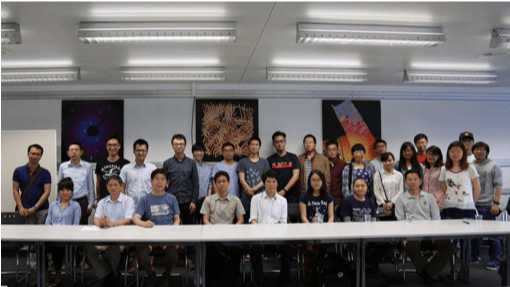
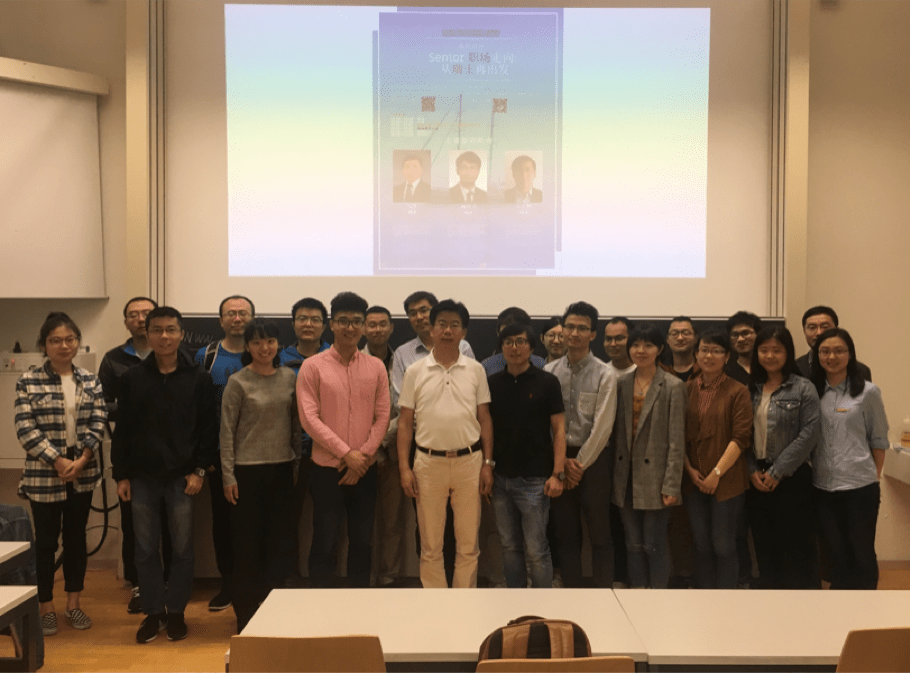
On 22th Jun. 2019, the Chinese Association of Materials Science and Energy Technology in Switzerland (CAMSETS) held the symposium of a scientific career in materials science and energy technology in Switzerland, 2019 – (SENIOR CAREER PATH: DEPARTING FROM SWITZERLAND) at the ETH Zürich. More than 30 students and scholars from materials or energy-related disciplines across Switzerland attended the conference. The conference invited three speakers who have graduated from Switzerland and planned to work in companies or research institutes in other countries.
瑞士中国学人材料科学与能源协会2019年会在ETH Zürich举行 The 2019 Annual Meeting of Chinese Association of Materials Science and Energy Technology in Switzerland was held in ETH Zürich
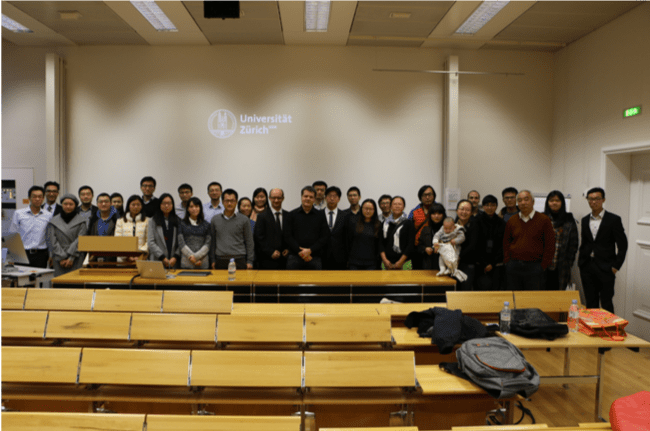
On 12th Oct. 2019, Chinese Association of Materials Science and Energy Technology in Switzerland (CAMSETS) held the 6th annual meeting at the ETH Zürich. More than 50 students and scholars from or interested in materials and energy-related disciplines across Switzerland have attended this annual meeting. Mrs. Meixia Yang, the president of Association of Chinese Students and Scholars in Zürich, and Mr. Zhongli Wang, the young representative from Chinese Science Club in Zürich joint meeting as our distinguished guests. The meeting this year invited four keynote speakers, the leading experts in the fields of materials science or energy technology, to give their speeches in the event. Afterward the meeting witnessed the transition of council of CAMSETS. This meeting was hosted by Ms. Wenqing Yan and Mr. Antoine Gilliand.
主持人阎雯青和Antoine Gilliand The hosts: Wenqing Yan and Antoine Gilliand
The annual meeting started with a comprehensive opening remark by Dr. Yong Dai, the president of Chinese Association of Science & Technology in Switzerland, which was followed by four wonderful keynote speeches from Prof. Edwin Constable, Prof. Patrik Hoffmann, Dr. Qin Xu and Prof. Ingo Burgert. The details of Keynote Speech are summarized at the end.
After the keynote speeches, the transition of council was held. Dr. Jun Qu, the former president of CAMSETS, recalled the highlights of the association over the past six years from 2013 and transferred his missions to the next president, Dr. Shuyu Liang. After introducing himself and the ongoing-constructed committee, the new president expressed his gratitude for the supports and trusts of Dr. Jun Qu, the association and the Chinese Embassy in Switzerland. He further showed his enthusiasm in leading CAMSETS to a new stage.
Professor Edwin Constable is a professor of Chemistry in University of Basel. The theme of his speech was “Sustainable Materials Chemistry: Escaping the noble metal paradigm”. He started from the state that sustainable and renewable energy needs to be developed because energy was necessary but producing energy meanwhile generated CO2 and accelerated global warming. Inspired by biology, the Dye Sensitized Solar Cell (DSC) was invented, but it used Ruthenium (Ru) complex as the typical dye. Prof. Constable proposed an improvement, using Cu as an alternative to Ru, which was richer in nature and thus cheaper. He then introduced how to technically achieve it, including the synthesis of homoleptic dyes [Cu(diamine)2]+, the protection of Cu ion and comparison of its difference types. The strategies for DSCs with heteroleptic dyes [Cu(Lanchor)(Lancillary)]+ – ‘Surfaces-as-ligands, surfaces-as-complex’ (SALSAC) approach was also further discussed. Prof. Constable also introduced the bleaching and regeneration method to increase the lifetime, and the co-sensitization to fill in the gaps in the absorption spectrum and therefore increase the efficiency. Prof. Constable mentioned in the end that iron could be a better choice in consideration of atom economy and showed some research results about that.
Professor Patrik Hoffmann is head of Laboratory for Advanced Materials Processing (LAMP) at Swiss Federal Laboratories for Materials Science and Technology (Empa) and adjunct professor in Laboratory for Photonic Materials and Characterization (LPMAT) at Swiss Federal Institute of Technology Lausanne (EPFL). He first introduced the four complementary research fields in LAMP: beam steered 3D printing, laser processing, powders and real-time process control. In his speech “Recent advances in 3-D metal printing with lasers – is it all about cooling rates?”, Prof. Hoffmann explained the influence of cooling rate on materials properties. On one hand, a cooling rate as low as 10-3 K/s creates monocrystalline silicon for the semiconductor industry. On the other hand, a cooling rate as high as 105 K/s can prevent metals from crystalizing, thus creating amorphous alloys or metallic glasses, that perform both high elastic modulus and high strength. Prof. Hoffmann introduced a PhD work in his lab where epitaxial growth of silicon on a silicon wafer was achieved. This technology could be used to directly print chips in future if successfully miniaturized. In addition, he also introduced defect detection in 3D printing using acoustic emission, influence of laser re-melting on metal grain sizes, simulation of the influence of surface tension on molten pool behavior, etc.
Dr. Qin Xu is presently a postdoctoral scholar in ETH Zürich, and he will be appointed tenure-track Assistant Professor of Physics at Hong Kong University of Science and Technology from March 2020. He gave a speech about “Interfacial Mechanics and Solid Capillarity of Soft Solids”. It focused on the soft materials that were 1,000 times softer than skin and with the Young’s modulus around 10-6 GPa. First, Dr. Xu talked about the role of surface tension in interfacial mechanics. Surface tension was an important mechanical property in research of soft materials. Experiments and measurements on surface tension of soft materials required advanced optical technique because of its tiny scale. Dr. Xu explained two kinds of instrument, one of them was confocal microscope, which can conduct the 3D measurement in a scanning way. However, confocal microscope required a much longer time than that taken by spontaneous dynamic motion to measure and thus have a relatively lower efficiency for studying the wetting dynamics. Another type of instrument was interference microscope, which Dr. Xu has built in his lab. In principal this designed device generates 3D image by interference with a much faster speed. Experiments showed that surface tension of soft materials was controllable and comparable to bulk stress. Dr. Xu also explained the great effects osmotic flow had on the relaxation process. Then he talked about liquid-liquid phase separation, including researches of it in cells’ elastic network and that the separation distance can structurally deviate the appearance color in biology. He mentioned in the end that making soft robotics and soft electronics via soft gel technology are both also the hot topics nowadays.
Professor Ingo Burgert is a professor of ETH Zürich. The topic of his speech was “Advanced Wood Materials”. He pointed out that the challenges materials faced nowadays were to be renewable, recyclable, energy efficient and environment friendly as well as to fulfill the requested performance without losing reliability. These drove developments of various new concepts for wood-based and cellulose-based materials. The bottom-up approaches included developing cellulose-based materials with new feature profiles, flow-assisted organization of CNFs into macroscale fibers, cellulose nanocrystal inks for 3D Printing etc. while the top-down approach focuses on the use of the hierarchical structure of wood materials. Prof. Burgert suggested that we could take advantages of various structures of wood for materials design. He further pointed out that the limiting factors blocking wood for a wider application were dimensional and UV stability, durability and flame retardancy. He showed that surface modification and wood mineralization could improve wood’s reliability and flame retardancy. Then, Prof. Burgert introduced new fields of application that were potential to be reached by wood with new property profiles, e.g. transparent balsa wood, wood with electric conductivity and magnetic beech wood with iron oxide nanoparticle assembly inside. Moreover, inspired by the plant actuation systems based on hygroscopic responses, the bilayer principle could also be done on the wood and this allowed wood to conduct a shape change, which could be used to develop deformable wood elements and manufacture curved wood parts. Prof. Burgert also discussed the promises of densified cellulose composites and polymer interpenetrating wood composites for sustainable engineering applications.
邀讲人:Ingo Burgert教授 Prof. Ingo Burgert前任会长曲军博士及现任会长梁舒宇博士 Former President Dr. Jun Qu and New President Dr. Shuyu Liang





 瑞士中国学人材料能源与智能科技协会